

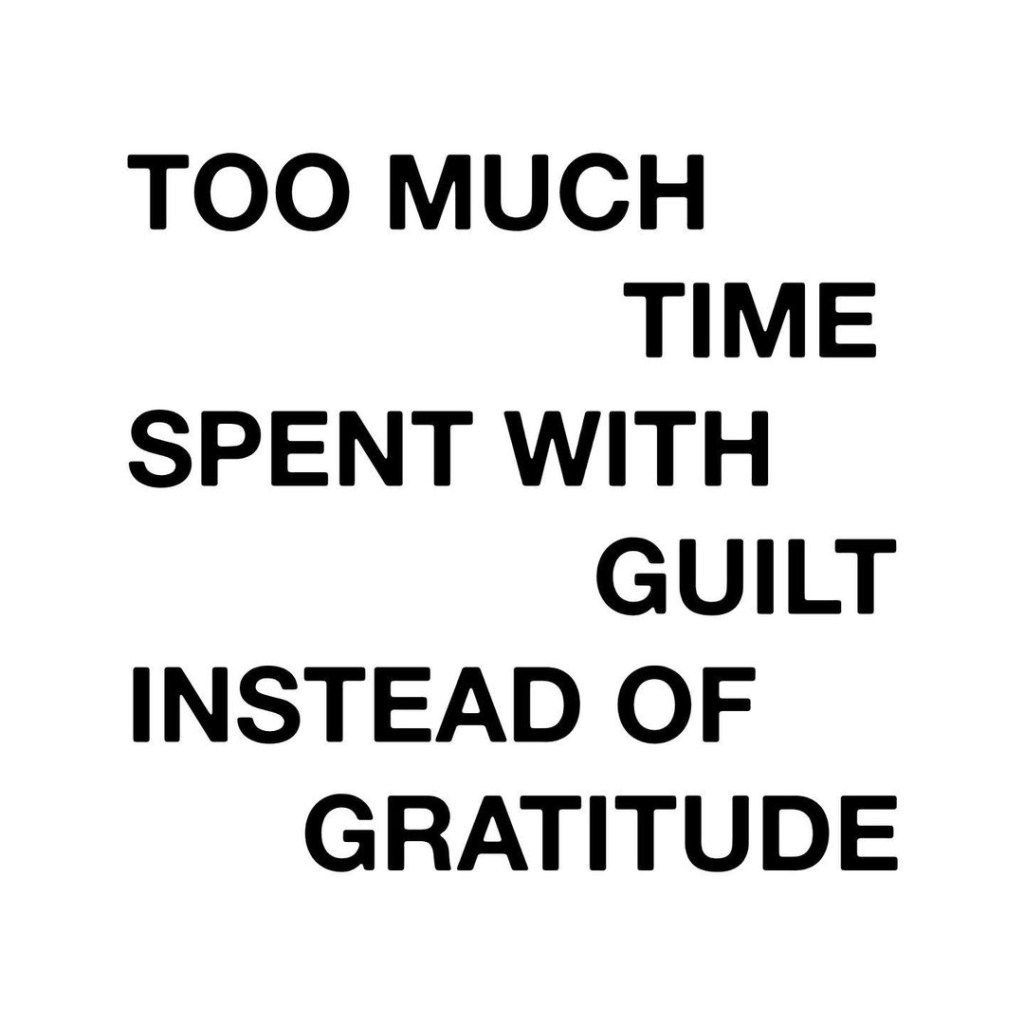
And after you’ve done hating yourself, then what?
We all do bad things sometimes. We lie. We hurt the people that we love. We act selfishly and without care. Sometimes we do it in small ways and other times those bad things feel monumentally shocking, cruel, and unforgivable.
I’ve done something I deeply regret and I accept that there will be pain, anger, and confusion from the people I hurt. I cannot begin to express my remorse, but there is another side to my actions too, one I did not expect.
It turns out that what we do to others we do to ourselves too and even when we are the perpetrators, we feel that pain, anger, and confusion too. These emotions are turned inward, and in the absence of an ability to escape or excuse, we drift easily to self-hatred.
The weight of this self-hate feels too heavy a weight to bear. I want to find my way over it, past it, through it, whatever it takes. I know what happens when self-hatred is held too long and though I’m not happy with the person I am right now, I never want to be that person again.
My shame threatens to become a shawl I wrap myself in and a mask I might face the world with. I can’t stand to be seen, even by those who profess to understand, love, and forgive me. I cannot separate the action from the human. I did bad, so I am bad.
I long to escape myself, and because I cannot, I stew in my shame and disgust. These feelings mix with a growing anger and confusion, filling me with potent self-loathing. I oscillate between active malice and passive detachment toward myself. If I cannot punish myself enough then I must get away from myself and if I cannot get away from myself—then what?
Thoughts like these are dangerous. They threaten to leave us walking through the world lowered and unlovable, incapable of meaningful connection or growth past our pain. There has to be another side to this shame. There has to be an answer to this self-hate.
The answer, I’m finding, is to simply sit with myself. I have to take the time to look directly and fully at who I am—not who I was or who I thought I was—and find out what there is left to love and there is always something left to love.
In these past days of reflection, I’ve learned a lot about myself I did not know before.
When we love someone, we call them perfect. We lie to ourselves and them, pretending they have no flaws. The longer we consign someone to this illusion of perfection, the greater the damage and disappointment will be when their full nature breaks through.
For a long time, I thought I was perfect. I prided myself on the contrast I had built between the brutal, chaotic world I was raised in and the righteous adult I had self-parented myself into. I believed my good deeds and noble thoughts had eradicated my capacity to be callous or cruel, but I had only become blind to myself. When my inhuman side showed its face, I was defenseless against it.
That is not to say I did not make choices, and that is not to say there are excuses, but there are reasons. After a wrong, it can be hard to contemplate the why. Attempts to answer the question can feel like a justification or defense of your actions. If we aren’t careful in our accountability, we can inadvertently invalidate the pain of those we’ve hurt.
But there is a difference between understanding and condoning and answering the “why” for yourself is the first step toward the other side of self-hate. It starts with confronting what inside you led you to inflict such hurt. More often than not, it will have less to do with who you really are and more to do with who you’ve failed to know you are.
It’s hard to know how to begin this exploration. The bad feelings threaten to overtake me whenever I begin, but I have found that keeping some perspective helps.
A lot of people are giving me the grace I do not feel I deserve. I hear them, but their words, like my own, sound hollow and untrustworthy. Their words, like my own, don’t confirm reality as I currently feel it. I’m trying to remember that my feelings are real, but they are not facts.
The reality is that on the continuum of human cruelties, mine is not the worst. The number of days I have spent endeavoring to be kind, helpful, understanding, and generous far outnumber the days in which my strength of character has failed.
When I think of my mistakes, I feel the weight of remorse. I know I am responsible for my actions and their harm. I see the dark places in me where these choices were made. When I look toward the future, I want nothing more than to be better and stronger—both for myself and the people I love.
In short, I am sorry. But right now, saying sorry feels next to doing nothing at all. I have to show I am sorry and that is where the real work begins. It’s easy as it is to prove yourself untrustworthy and unknowable. It is exponentially harder to prove yourself otherwise after the fact.
I am as much the person who did wrong as I am the person who does right, but I, and the people around me, have to get to know this whole version of me all over again. It will take being patient with myself and the people who want to love me again.
“You must let the pain visit.
You must allow it teach you.
You must not allow it overstay.”
— Ijeoma Umebinyuo
Being patient with myself also means accepting that, for now, my dominant emotion will be a wide and deep sense of self-hatred. Like a dark lake stretching to the horizon, I know there is a shore of security, happiness and maybe even love on the other side, but I cannot yet see it, let alone swim to it from where I am, or who I am, today. I accept that, for now, this period of shame and remorse may be necessary, but I cannot allow the feelings to overstay.
Self-hate is a story we tell ourselves. It’s a fiction so vivid we take the plot as truth and its ending as an inevitability. It is not. You will not come out of this unstained, but you will come out whole, good, and free. You will have a chance to be better because you will finally know better what you are capable of.
Left unchecked and unchallenged, this fiction leads to isolating, wallowing, and self-victimization. It feeds on itself, growing stronger and deepening its hold on the bearer. Give yourself the grace you don’t yet think you deserve and space to do better. Small steps will take monumental efforts, but they lead, little by little, to a new story.
I have proof of the pain I caused. I have evidence of my capacity for cruelty. Now I need to see something in me that I can write a new story from. I need to see something good. I need to become who I thought I was—someone who doesn’t do this.
There will be an after to this time of self-hate—if I want it. It lies on the other side of a long journey of reflection and reckoning, but it is there. In the moments I can allow myself to, I dream of reaching that shore and finding a self-love that embraces all of me—a sanctuary of acceptance I have yearned for my entire life.
 Lisa Marie Blair