
How the Body Holds

Lately, the hurt lives more in my body than my mind. I suffer through sleepless nights in a row, writhing with headaches that resist every remedy. More mornings than not I wake with a stiff neck and a clenched jaw. My back insists it needs stretching and cracking, but nothing softens the knots over my spine. I walk through my days with shoulders rounding under the weight of grief, loss, and regret. My pulse races and skips. My body rides a rollercoaster of lethargy and hypervigilance.

Sleep is never enough to ease my exhaustion or soothe my swollen eyes. There is no position I can shift into that calms the ache between my bones. On the worst days, my skin pricks, my extremities tingle, threatening to go numb. My right eye twitches incessantly, fraying my nerves. Too often, my chest tightens at a memory or word that cuts too deep. Tears flow more freely, and guttural cries rise from parts of me I’m not yet familiar with.

I blame my workload. I blame politics and the economy. I blame my age. I wonder if I’m getting sick or if I should have my hormones checked. Is it my thyroid? Is it something worse? Winter is on the way, and I wonder if it’s the clouds and the cold mountain air getting to me. None of this feel quite true.

Deep down, I know. Deep down, I don’t want to admit it. My body is trying to tell me something I’ve been too distracted, too afraid, too proud to hear.

These confounding symptoms are how, slowly, but growing more insistent, the body speaks up. Its language is somatic. It whispers through the skin, the gut, the heart, the lungs. It screams through tension, aches, pressures, and ultimately illness.

For more than half a year my mind has tended to itself, mending from the aftermath of a bomb—lit, admittedly, by my own hand—that leveled everything I thought I knew. I’ve been like a patient waking up from a coma, recovering memories, relearning speech, trying to name and place the things and people I once knew but no longer recognize. I have been busy rebuilding a broken self and learning how to live among my wreckage.

While my mind worked through the ruins, my body absorbed what it could not yet bear. It took the shock, the stress, the confusion, and held on while my mind fell apart. The hurt had to go somewhere, but the body is no place to process emotion alone. Instead, the pain is stored away. What you can’t feel tightens the chest. What you can’t say clenches the jaw. What you can’t face turns into fatigue. Your longing and grief become migraines and nausea.

This is not a flaw or weakness of character. Its a natural mechanism of human survival, a quiet testament to the silent strength of human endurance. When the illusion of the self is destroyed and the ego so humbled, a trauma is inflicted. We can’t find our footing. Our identity, in free fall, is severed from the physical world.

The body does this not out of betrayal, but out of love. For many of us, this is a coping mechanism refined over years of suffering. I spent much of my young life surviving this way until I felt safe and strong. Now, as my psyche suffers and my mind reaches the limits of resilience once again, my body steps in behind my consciousness to take what it can and temper the pain. It holds and protects me until I’m ready to feel.

We rarely give our bodies credit for this care. We readily abandon the very part of ourselves that saves us, again and again. The mind is so prioritized and preoccupied that we forget to notice our own hunger, our thirst, our exhaustion. We deny our needs and neglect to bathe, to move, to seek connection.

And now that the mind has recovered enough to pause, I am beginning to learn how to listen—to feel the aches, the tension, the exhaustion—and understand what my body needs. This pain is not my body’s failure, but its memory. Resenting this physical release would only add to the already arduous journey ahead. This time, I want to give grace to the body that once gave it to me.

But it’s a hard thing to accept the damage that is done through prolonged neglect. When your mind lays shattered too long you may return to muscles that have lost their strength, posture collapsed under invisible weight, a body unrecognizable after weight waxes and wanes. We come back to the body but we can’t find our place in it. We can’t recognize it as part of ourselves.

There is sometimes shame in this estrangement. Not only are we held accountable for abandoning the body, but our suffering becomes visible and our neglect evident to the world. Yet, the change also confirms our hardship and our survival. Your pain is never “all in your head.” Hold onto that truth, even if you are the only one who knows it.

Slowly, as you learn who you are again, you can reconnect with what you are. It will take being brave enough to bridge your inner turmoil to the erratic, almost arbitrary bodily suffering you sense. Seeing your mental state manifest physically feels validating, almost comforting. It makes sense, you think, that the body should ache while the heart does.

And yet, the recognition won’t magically undo the pain. I know how easily one can slip from witnessing your suffering to sinking into an abyss of self-pity. Validation of the wound can deepen it if we aren’t careful. This perpetuation of pain is poison masquerading as a healing tonic. Let the pain be a way out, not a way in.

What the body needs is not so different from what heals the mind and heart: attention and acknowledgment—not judgment or intimidation. Take note of every discomfort and name it: tightness, twitching, heaviness, numbness, nausea, fatigue, sensitivity. Feel your pulse racing. Breathe with your panic. Caress your knotted muscles. Let the tears fall and hold your chest as you cry out.

With tolerance and tenderness, give yourself time and permission to feel fully these aches and pains while you witness what the body did to survive. Cultivate curiosity as you gently press against the edges of your resilience and awareness, exploring and encouraging growth. Begin by meeting your body’s basic needs: eat better, sleep better, move your body, and sit in the sun as often as you can. Start slow and respect your new limits. Rest mindfully, breathe deeply, laugh—at others, at yourself, at the absurd comedy of life.

Like all healing, it won’t be easy, and it won’t look like a linear process. You will not be rewarded for speed or perfection, but for your presence and patience. Forgive the way you misstep and stumble. Forgive the resistance you face and the failures when you push too hard and ask too much.

Let go of the need to control. Accept the long hours of rest you will need. Accept that the body has its own timeline. Accept that you can’t do it all and that you will need help. Tolerate the discomfort as your body labors in mending and changing. Soothe those aching places with tender touch, and be kind where you may have been cruel to yourself before.

When you feel frustrated, find gratitude. Take time to thank your body for bearing what you could not. Acknowledge the heavy burden of grief, anger, heartbreak, and self-hate you have been carrying. Promise yourself that from here you will lighten that load with love. The body has held what the mind could not. Now, it’s the mind’s turn to hold the body—with patience, presence, and love.

Here, it is the job of the mind to hold onto hope—a hope grounded in reality and open to a hard truth. A mind that has shattered, a heart that has broken, and a body that has wasted can’t return to what it once was. This is not a time of returning, but of reconciling and rebuilding. This is a time of slow negotiation between the mind that fled and the body that stayed. Grieve who you were and celebrate that you will heal stronger.

The journey will be a long one, and there are no shortcuts. The more you resist or force, the more you will have to heal. Tend to yourself daily, but only as much as you can— mentally, emotionally, and physically. Over time, you will begin to carry your grief differently. What was broken won’t be broken forever. What hurts won’t always hurt so much. The past is not your punishment; it is your teacher.

My own healing still lurches and lags from week to week, but already my shoulders seem a little less rounded. My chest isn’t quite so tight. The weight is beginning to be easier to bear. This new self emerging in me grows clearer, more solid, and strong each day. I’m committed to the work it will take to become her, bit by bit. One day, I will wake up and I’ll know who and what I am again, for a while.

As the Buddhists say, “Life is suffering.” The truth is, each of us will endure continual cycles of hurting, surviving, and healing. But if the nature of life is suffering, then the nature of humanity is certainly not. Perhaps you already know this. Perhaps you’re learning it now too, in your own body, through its own somatic language.

Day by day, and between each heartbreak, failure, and devastating loss—if you’re lucky—you learn what it means to inhabit the body and mind both with compassion. You discover what it means to be wholly human—to endure, not despite the suffering, but through it.

An Inventory of Pain

Physical Pain:
The discomfort in my metatarsophalangeal joint waxes and wanes depending on whether I allow myself rest and my level of clumsiness. Low-level fatigue persists, still. Some days I blame myself, and other days it’s simply part of who I am. Dull aches dot my body, radiating from muscles I am working to grow. There’s also a point of irritation where tape flattens my chest and wrinkles into my skin.

Some pains we chase.

Emotional Pain:
The fracture in my heart feels less acute each day, though somehow the intensity remains unchanged. It’s no longer an emergency, but a condition I must manage. Guilt is fading, but there is a minimum that must always be maintained. In its place an anger burns—red-hot and refreshing.

New or increasing pain can be a sign of healing, too.

Psychological Pain:
My everyday anxiety is finally being treated and the racing, jumping thoughts characteristic of ADHD are managed when they have to be, and allowed to reign free where they can do less harm. Even so, the pause between panic and action, catastrophe and reality, still feels like a monumental mental climb.

Relational Pain:
Some losses in love feel closer to autoamputation—a misguided attempt by the psyche to sever what it deems, in conclusion or delusion, a nonviable connection. With immediate intervention, repair is possible, but function will almost certainly be impacted. There are no guarantees.

Either way, healing will be long, and it will hurt.

Spiritual Pain:
I don’t know how to pray. Even when I try, in my way, all that answers is more penance. In my search for heaven, I earned myself a hell. Now when I pray, I’m only speaking to myself, and the “greater than myself” I once held to feels that much smaller. I don’t believe in God, but I know he is in everything. I feel farther from him now more than ever.

Still, I ask myself: Who moved?

Proven Remedies and Comforts:
Mochi ice cream. Changing or adding medication. A kiss on the couch. Five hours on the phone with a friend. The sun. The rain. Permission to forgive yourself. Permission to say no. Seeing your favorite artist in concert. A therapist who tells you the truth in a new way. Crying in the car. Getting on a plane. A good night’s sleep. Screaming. Saying you’re sorry—and meaning it. Not saying sorry when you don’t. Not hurting yourself again.


A Distance Measured in Silence

what are the consequences of silence?

They warned me, over and over again—marriage is hard. They, people who’d committed for lengths of time with one another I couldn’t yet comprehend, warned that the years together would wear on us and that the work required to stay together would one day feel futile. I always laughed these warnings off. After all, we were different.

I thought they meant it was hard to keep the love alive, but it turns out that loving someone is the easiest thing in the world to do. We long to do it. It comes as naturally as breathing, and once that love settles in, it stays. What’s hard is the inevitable realization that you don’t actually know how to love someone, and worse, you don’t even know how to let them love you.

They don’t tell you that the ones you love will bring out the worst in you and that you will get the worst of them. They don’t tell you you’ll start loving the version of them that lives in your head more than the reality of the one in front of you. They don’t tell you that you will take the things they say and do as unquestioning confirmation or denial of their love.

They don’t tell you that you will keep score, and then even the score when you don’t feel loved enough. That the love will be there, but it will get buried under expectations you didn’t know you had. That once it’s buried, it won’t matter that the love is there, because what good is love when you can’t find it?

They simply say marriage is hard and the longer you are married, the harder it gets, but you can’t hear that when your love is young. When your love is young, all you want is more time, and the more time you have, the more time you want, but time isn’t just something to give or spend. Time is also a container, and the more time you have between you, the more that time holds.

Time holds all the good memories, but it is especially good at preserving the bad ones. It holds every frustration and fight. It carries all your unmet expectations and unrealized hopes. Time will grow heavy with your fears and failures. You begin to carry these buckets of time full of your unresolved hurts into every interaction, trying to unburden yourself but only filling the time with more pain.

When the weight becomes too much to bear, you begin to build a world from it. You begin with putting up walls between you, then the rooms you retreat to alone, and soon you each have a staircase to look down on each other. You put in a window to look away, and eventually, a door appears, beckoning you to leave.

We built so many walls that I couldn’t see what I couldn’t see. We hid the debris of our life together in dark closets and cabinets that threatened to burst at the hinges. We would tread lightly around one another, afraid to disturb the delicate balance. The quiet was meant to keep the peace, but it only built pressure, and pressure always seeks release.

If you wait long enough and if you’re not careful enough, time can become a kind of distance too, and that distance grows when time fills up with silence.

Our silence was like living in a house with a cracked foundation. On the surface, everything seemed solid and safe, but beneath us, the structure slowly weakened with each unspoken word. There was glaring evidence, but we ignored it. I didn’t pay attention to the doors that didn’t close right. I ignored the floors that shifted under my careful steps. I didn’t want to feel how the walls pressed in, making it hard to breathe.

The sounds of all that was unsaid grew louder and louder until a deafening hum of unheard and unresolved hurts filled my head. Under the weight of that silent hurt, our connection withered away, and we withered with it.

In the end, the emotional expanse was too wide to shout over. Instead, we stood on our opposite cliffs, throwing into the gap our old and open wounds, red-hot resentments, and assumptions so old they felt like natural truth.

We thought we knew each other. We thought we understood. But without words, how could there be any knowing? We kept it all in, thinking we were being kind. Why worry you? Why ruin a pleasant night? Why start a fight? Why risk your judgment? Why risk my heart? We buried it all because we were afraid. We buried it so we could pretend it was fine. We buried it because what else could we do with it all?

Fear kept us from speaking, and we passed our long silences with all the wrong words. Tell me about your day, but not about the loneliness inside you. I’ll tell you a joke I read online, but not about my growing fear that you don’t love me. Tell me about your weekend plans, but not about the grief of all you haven’t accomplished. I’ll tell you I haven’t been getting enough sleep, but not that I sometimes dream of running away.

When the pressure of it all grew too great, we exploded, flinging the wreckage and waste like weapons at each other. When the dust settled and we found ourselves again, we took all that was damaged and shoved it back into our dark corners and locked rooms. We called that hiding a kind of healing, but fear grew with every harsh word, every perceived criticism, and every moment of hesitation. 

This is the consequence of silence: a world that falls apart so slowly you forget to fix it, a destruction that happens in plain sight and in secret. A death that you feel while you are still alive.

The blame isn’t on one or the other. It never is. Where one failed to ask, the other failed to tell. It’s a failure that we share.

If I could do it all over again, I would say it all to you, all the time. I would never let silence grow between us again. It is one of the great cruelties we commit in love. You can’t truly love someone if all you have of them is what you imagine, and when you hold yourself in, you leave spaces in the others understanding they fill with all their worst fears. 

If I could speak up now, I would say that this silence doesn’t have to be our ending. If there is anything left to salvage from these ruins, it is this: we still have time. We can still say it all. And this time, we can listen.

“we couldn’t forgive each other for the things we never said”

saint clair


A Reckoning With Yourself

“I need to be alone. I need to ponder my shame and my despair in seclusion; I need the sunshine and the paving stones of the streets without companions, without conversation, face to face with myself, with only the music of my heart for company.”

― Henry Miller, Tropic of Cancer

When you are sad, everyone wants to make you smile. When you can’t smile, they want to make you talk. And when you can’t talk, they want to make you listen—anything to keep you from feeling what you feel.

They mean well. Their hearts are in the right place, mostly. They love you, and they think if they can pull you away from what’s hurting you, that is exactly what you need to feel better. But it’s the greatest hindrance to healing you can offer.

Other times, when people try to help, it’s not about love—it’s about their own discomfort. Your sadness triggers something in them that they can’t face. Your pain reminds them of something buried inside themselves, something they have worked hard to avoid. To allow you to work through your pain would remind them of what they haven’t had the courage to do. So, they quiet what is in them by quieting what is in you. Your distraction is their distraction.

And we are too happy to let them do it. The pain of what we are going through is heavy and at times unbearable. If you can’t soothe it you will search for anything to stop it, and there are endless ways to escape—through people, through work, through staying busy, through substances, through dissociation, by hurting ourselves, by chasing pleasure, by numbing it all away. But distraction isn’t the same as healing. It only delays the inevitable.

Avoidance isn’t just unhealthy; it’s ultimately impossible. What we bury never stays buried for long. In the deep, dark, damp soil of your heart and psyche, pain feeds and festers. It creeps along, growing like slime mold, silently, secretly searching for relief. It works its way into the cracks of the ways you think and behave. It thickens, coating the way you speak, the way you love, the way you move through the world.

You remedy it the best that you can. You scrape away what’s visible by pretending, manipulating, and lying. But the pain runs deep. You have to get to the roots before they take hold, or the hurt will only follow you from home to home, job to job, relationship to relationship. There is no running. There is no rest.

Too often, we don’t know how to feel our emotions. We don’t understand them, don’t know how to name them, don’t know how to sit with them. From infancy, we’re taught to stop crying, to repress our anger, and to put our hurt aside until we are old enough to earn the right to feel. And all that time, what do we do? We turn away from what is in us and chase pleasures to feel better.

We come to where we are now and we hardly know ourselves. We can’t fathom what we are made of because we haven’t faced who we have become and how. Solitude forces you to stop running. It asks: Who am I, really? What am I carrying? What have I been too afraid to let in or let out? And when all the distractions—the people, the pleasure, the power—are stripped away, what is left?

I used to hate being alone. I wasn’t someone I wanted to be alone with. There were too many hurts waiting to rise to the surface. My past threatened to creep in when the present got too quiet. I feared my shame would swallow me up or, worse, that my rage would consume me. I did everything I shouldn’t do to avoid facing myself. But avoidance only led to more trouble, more shame, and more hurt.

For me, it began with, little by little, allowing moments of stillness into my day. A minute in the day when I would pause for a quiet breath. Admitting something to myself that was hard to hear. A short journal entry before bed. And when the painful memories, the intrusive thoughts, the raging impulses came I little them stay just a moment longer than the last time.

Learning to sit with discomfort, to witness pain without running from it, takes time. But little by little, you build resilience to yourself. You realize that no feeling is final. No emotion will destroy you. They hurt, yes, but only as much as we let them fester.

As it got easier, I could listen more in all those secret, forgotten places. I followed the thick roots of my hurt—first without judgment, then with empathy. And in listening, I started to see that so much of what hurt in me wasn’t my fault.

Emotions aren’t failures. They don’t come to harm us; they come to be healed. Solitude is where you give yourself what was missing, and it has to be you. No one can face you for you. No one can heal what is broken in you but you. No one can come between you and the reckoning you must have with yourself.

The most anyone can do is see us off at the start, and then both sides have to let go. This is hard to accept. When we love someone, we wish we could take their hurt away and carry them to the end where they are whole and healed. And when we are on the hard journey to the hardest parts of ourselves, we want someone to reassure us, to make it all okay. But the help we can offer one another is so often less than either side hopes.

When you love someone, you do not take their solitude away. You do not rush them out of their pain or distract them from their hurt. When you love someone, you must hold their solitude as something sacred, even if they can’t yet.

You may stand near, but not in the way. You may encourage them to keep moving, but you cannot carry them along the path. You let them do what only they can do—work out who they are so they can begin again.

We do this for each other, but true healing has to begin with us alone.


And After Self-Hate?

And after you’ve done hating yourself, then what?

We all do bad things sometimes. We lie. We hurt the people that we love. We act selfishly and without care. Sometimes we do it in small ways and other times those bad things feel monumentally shocking, cruel, and unforgivable.

I’ve done something I deeply regret and I accept that there will be pain, anger, and confusion from the people I hurt. I cannot begin to express my remorse, but there is another side to my actions too, one I did not expect.

It turns out that what we do to others we do to ourselves too and even when we are the perpetrators, we feel that pain, anger, and confusion too. These emotions are turned inward, and in the absence of an ability to escape or excuse, we drift easily to self-hatred.

The weight of this self-hate feels too heavy a weight to bear. I want to find my way over it, past it, through it, whatever it takes. I know what happens when self-hatred is held too long and though I’m not happy with the person I am right now, I never want to be that person again.

My shame threatens to become a shawl I wrap myself in and a mask I might face the world with. I can’t stand to be seen, even by those who profess to understand, love, and forgive me. I cannot separate the action from the human. I did bad, so I am bad.

I long to escape myself, and because I cannot, I stew in my shame and disgust. These feelings mix with a growing anger and confusion, filling me with potent self-loathing. I oscillate between active malice and passive detachment toward myself. If I cannot punish myself enough then I must get away from myself and if I cannot get away from myself—then what?

Thoughts like these are dangerous. They threaten to leave us walking through the world lowered and unlovable, incapable of meaningful connection or growth past our pain. There has to be another side to this shame. There has to be an answer to this self-hate.

The answer, I’m finding, is to simply sit with myself. I have to take the time to look directly and fully at who I am—not who I was or who I thought I was—and find out what there is left to love and there is always something left to love.

In these past days of reflection, I’ve learned a lot about myself I did not know before.

When we love someone, we call them perfect. We lie to ourselves and them, pretending they have no flaws. The longer we consign someone to this illusion of perfection, the greater the damage and disappointment will be when their full nature breaks through.

For a long time, I thought I was perfect. I prided myself on the contrast I had built between the brutal, chaotic world I was raised in and the righteous adult I had self-parented myself into. I believed my good deeds and noble thoughts had eradicated my capacity to be callous or cruel, but I had only become blind to myself. When my inhuman side showed its face, I was defenseless against it.

That is not to say I did not make choices, and that is not to say there are excuses, but there are reasons. After a wrong, it can be hard to contemplate the why. Attempts to answer the question can feel like a justification or defense of your actions. If we aren’t careful in our accountability, we can inadvertently invalidate the pain of those we’ve hurt.

But there is a difference between understanding and condoning and answering the “why” for yourself is the first step toward the other side of self-hate. It starts with confronting what inside you led you to inflict such hurt. More often than not, it will have less to do with who you really are and more to do with who you’ve failed to know you are.

It’s hard to know how to begin this exploration. The bad feelings threaten to overtake me whenever I begin, but I have found that keeping some perspective helps.

A lot of people are giving me the grace I do not feel I deserve. I hear them, but their words, like my own, sound hollow and untrustworthy. Their words, like my own, don’t confirm reality as I currently feel it. I’m trying to remember that my feelings are real, but they are not facts.

The reality is that on the continuum of human cruelties, mine is not the worst. The number of days I have spent endeavoring to be kind, helpful, understanding, and generous far outnumber the days in which my strength of character has failed.

When I think of my mistakes, I feel the weight of remorse. I know I am responsible for my actions and their harm. I see the dark places in me where these choices were made. When I look toward the future, I want nothing more than to be better and stronger—both for myself and the people I love.

In short, I am sorry. But right now, saying sorry feels next to doing nothing at all. I have to show I am sorry and that is where the real work begins. It’s easy as it is to prove yourself untrustworthy and unknowable. It is exponentially harder to prove yourself otherwise after the fact.

I am as much the person who did wrong as I am the person who does right, but I, and the people around me, have to get to know this whole version of me all over again. It will take being patient with myself and the people who want to love me again.

“You must let the pain visit.
You must allow it teach you.
You must not allow it overstay.”

— Ijeoma Umebinyuo

Being patient with myself also means accepting that, for now, my dominant emotion will be a wide and deep sense of self-hatred. Like a dark lake stretching to the horizon, I know there is a shore of security, happiness and maybe even love on the other side, but I cannot yet see it, let alone swim to it from where I am, or who I am, today. I accept that, for now, this period of shame and remorse may be necessary, but I cannot allow the feelings to overstay.

Self-hate is a story we tell ourselves. It’s a fiction so vivid we take the plot as truth and its ending as an inevitability. It is not. You will not come out of this unstained, but you will come out whole, good, and free. You will have a chance to be better because you will finally know better what you are capable of.

Left unchecked and unchallenged, this fiction leads to isolating, wallowing, and self-victimization. It feeds on itself, growing stronger and deepening its hold on the bearer. Give yourself the grace you don’t yet think you deserve and space to do better. Small steps will take monumental efforts, but they lead, little by little, to a new story.

I have proof of the pain I caused. I have evidence of my capacity for cruelty. Now I need to see something in me that I can write a new story from. I need to see something good. I need to become who I thought I was—someone who doesn’t do this.

There will be an after to this time of self-hate—if I want it. It lies on the other side of a long journey of reflection and reckoning, but it is there. In the moments I can allow myself to, I dream of reaching that shore and finding a self-love that embraces all of me—a sanctuary of acceptance I have yearned for my entire life.


Nothing That Isn’t for Anything

If you had an extra hour every day, how would you spend it?

I think the one thing almost all adults have in common is the feeling that there is never enough time to get everything done that you hoped to. The to-do lists get longer, and the hours get shorter. You wake up, work, and then spend your free time getting ready to go to work again. Somewhere inside, you think, you feel, you know that this isn’t the way it should be, but you look around and everyone is living life like you, and they say nothing at all.

I feel it too, and for years I’ve had the sneaking feeling that we’re all living life backwards. We’ve been taught that our time is owed. Every hour is either one borrowed, one to be paid back, or one bought and paid for either with love or currency. It’s as if your life is already spent, and the feeling only grows more intense and more insistent as you get older. I have less and less to give, but more and more is asked all the time.

When I think about having an extra hour, my first instinct is to spend it on all the work that keeps piling up. I was raised to thrive in a capitalist and individualist society, after all. Of course, most studies show that if you really want to increase happiness, work is the last area of life that you should give anymore time to, let alone an extra miracle hour.

I might consider giving more time to maintaining my personal relationships. I call my friends more. I could never see my family enough. My wife certainly deserves a little more of my day, too. An extra day with any of them would definitely be well spent. The thing is, if I’m being honest, I could do that now if I could manage to both stay off of social media and get out of the expectation that I should always be working.

An extra hour can already be found, but what about an extra hour that was given? What if my day was suddenly 25 hours long instead of 24? What would I do with that time?

It’s hard to explain what I would do because I don’t want an extra hour to do something. I want an extra hour to do nothing. I want one hour every day to do a certain kind of nothing. You know the kind I mean. You remember it—the kind of nothing we all used to do when we were kids.

Do you remember the days that you spent playing with friends, or even by yourself? You were so busy running, jumping, climbing, exploring, and making up worlds and rules, and you would come home and your parents might ask, “What did you do today?” Almost every time, kids will shrug and give the same reply, “Nothing.” Of course, it was something. The time passed, and you played, but it happened so naturally that you hardly paid attention to it. I want to do that kind of nothing again.

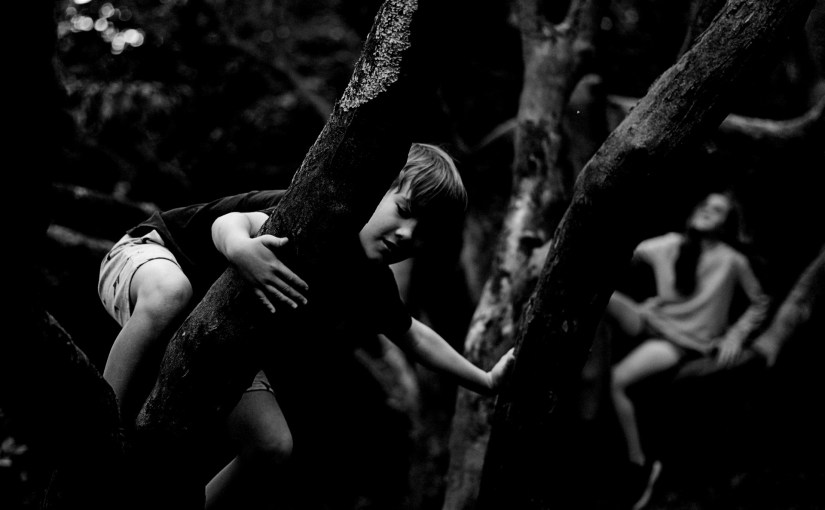
Think of it: When was the last time you climbed a tree? When was the last time you made something using your hands? When was the last time you played a game that you made up the rules for? When was the last time you went on a hero’s journey before the streetlights came on? When was the last time you lost time? Could you imagine doing it again? What would that look like for you now?

Just like when we were kids, I wouldn’t spend it doing the same thing every day. The only common thread is that for that one extra hour each day, I would completely disconnect. No phone, no laptop, no TV. I could walk somewhere, I could write a poem or make a new collage, or I could just lay somewhere in the sun. It wouldn’t matter whether I was busy or if I stared at a wall. The point is that for a full 60 minutes a day, I would hear only my own thoughts and direct my own actions.

Sadly, that kind of nothing doesn’t come easily or naturally anymore. I don’t know whether it’s something that is discouraged in us or something we lose by simply aging, but playing, imagining, and making things feel hard to do now. My world has closed, and my thinking has become rigid. I feel silly or stupid trying to play now. I feel like I’m wasting something or losing something when I give myself over to that kind of nothing.

I suppose when you are an adult, play takes practice; it takes discipline. Play feels like work when you’ve grown out of it for so long. You have to fight the instinct to take yourself too seriously or to judge yourself too harshly.

You have to remember that the nothing you do isn’t for anything or anyone. It’s not to learn something, although you might. It’s not to make money, though some people do. The purpose of doing nothing is to just be. It’s like following yourself on a journey. You don’t know where you will end up, but you follow yourself in the sun, up a tree, through make-believe worlds, and back to yourself. I think a journey like that would be a miracle hour well spent.

🌶️

Isn’t It a Miracle?

Isn’t it a miracle that we’ve ended up as ourselves?

My youngest sister is always trying so hard to become someone. I have tried, but I still haven’t found the right way to explain to her that no one ever really becomes a final someone. You never stop becoming. I want her to know that who you are is not a final, permanent product but an ever-growing, changing, transient thing.

I try to think back to when I was her age, fifteen years ago—a lifetime. I see me as I was then, and I can see me in her as she is now. I remember that sense of anxious wondering. I wanted to find my place in the world. I wanted to be who I was already.

What I try to tell her all the time is that by spending so much time chasing who you will become, you lose precious time being who you are. I try to tell her that she can’t be who she will become now. She can only be who she is now, and wait. That is how it will always be.

Of course, I have a lifetime of hard lessons to lean on. She can’t truly understand what I mean because the truth hasn’t happened to her yet. It takes aging and the ability to see that in every moment who you think you are is really only a thin slice of a long gradient of who you are.

Identity, I have come to see, is not a thing that can be described at any one time, but something that exists over time, perhaps even longer than a lifetime. (Perhaps, and this may be the subject of another post all together, even bigger than one person!) So much of who you are is, after all, determined by events that occur before you are born and much of who you are will live on even after you die.

Maybe that isn’t what is so hard to grasp. Maybe the hard pill to swallow is the weight of all the choices you didn’t make. All that hindsight builds up and begins to cloud our view of time, of the self, of the choices that were actually available. We carry the all the versions of ourselves we could have been and slowly, slowly come to hate the person we have become in comparison.

It’s not really a fair comparison to make. The present self can never measure up because, of course, the imagined self is always perfect. The truth is that imagined self could never have existed because nothing in nature can be perfect. The truth is, if you must make comparison, there is an equal and opposite lesser self you have risen above. The truth is, it is a miracle that each of us is anything, anyone, at all.

I don’t mean this in a purely woo-woo or spiritual way. But it’s hard not to get a bit metaphysical when you consider the sheer chances that each of us should be born, should choose one course or another, should meet and love and hate the people that we do, and that we should have self-knowledge enough to wonder about who we are, who we could have been, and that we should have further choices to become more ourselves or someone else entirely.

One thing I try to do when I find myself dwelling too harshly on what I should have done or who I should have become, is try to embody that version of myself again without the knowledge I have now and ask, my circumstances, feelings, and available choices then. Whenever I do this, I find that I did make the best choice that I could then.

I truly believe each of us is always doing our best at every moment. I think we are the best versions of ourselves we can be and a lot of what determines who we become in the next moment, the next year, the next job, relationship, place or time we end up in comes down to the tools we have and the choices available.

Another hard pill to swallow is, not all options are available at all times. There are limits of time, of money, of character, of desire. It is not possible for me to become President of the United States from here because I don’t know how; I don’t have the money or time; I don’t have the right temperament, and I certainly don’t have the desire.

What we most often mourn when we mourn who we could have been was a lack of tools, a lack of knowledge, and a lack of love. Given how little of that is available to each of us, especially in a time when we are so separated by the vast internet and in a culture that pushes stanch individualism, it truly is a miracle that we all become who we are.

I marvel at the myriad of ways a human being can come together. It’s a miracle that we are all born, that we crawl and claw our way out of childhood through a harsh human world embedded in an indifferent universe and still we find so much strength, kindness, wisdom, humor, and happiness to share.

No, you might not be the richest person or the smartest. You might, like me, make mistakes every day. You might fail yourself and fail the people you love. You probably get it wrong most days and some days you are too tired to try again. You may be afraid, you may be angry, you may be lonely and you may even be tired of this ruined life, but through all that you, like me, are beautiful and your life, like mine, is precious.

All this is simply to say, you don’t have to be anything more than what you are from moment to moment. There is no you to become. There is simply a life to live. Being one thing or another is such a small thing in comparison to the experience of becoming. Being one thing or another is only another way to settle. It’s a fraction of a life.

I Deserve to Dream

How do you dream big?

When I was growing up, I never heard the adults around me speaking in future tense. Everyone around me seemed too busy coping with their past or simply surviving the present. My parents in particular, spent almost all their waking hours working to keep food on the table, a roof over our heads, and clothes on our backs. When they weren’t doing that, they slept, they fought, they cried, they yelled, and sometimes worse.

My whole childhood felt like running from one crisis right into the next. There was never any time to think about the future. There was nothing to do but deal with what was in front of you.

Even as early as elementary school, I lost the ability to imagine who I could be someday. I remember being sent home with assignments asking us to dream up who we wanted to be when we grew up. I can’t even remember what I must have written down. Perhaps I drew an astronaut; I was always interested in space. Maybe I drew a veterinarian. I did love animals. Whatever I drew, it was a lie. I didn’t dream of being anything.

Even as a teenager, I could not see past the very immediate. Many of the crises I had lived through by then had rooted in me and become internal. I spent years just trying to find my footing in life, trying to live. I couldn’t see past turning 18 years old. After I turned 18, I couldn’t see past 21. After 21, I found some stability, but couldn’t move my mind further than life up to 25. Every year since has felt like a surprise, a gift, a few of them a curse.

It isn’t that I thought I wouldn’t be around all that time, although that was certainly within the realm of possibility, I simply never thought I would be one thing or another. For me there was, and still is, a great sense of indifference, a gaping hole of simply nothing, where my image of the future should be. I might be something, or something else, or nothing at all, but it just won’t be up to me. Dreaming is a waste of time.

The future feels like something that will happen to me, not something I can shape. Sure, I can make small choices—what to eat for lunch, what to say, whether to write, when to go to bed—but big things—the job I will have, what kind of home I can afford, how long I will live, whether I am loved or note—just don’t feel like they are up to me. It’s chance, or luck if you prefer that. I don’t dream, I simply do.

I have managed to stumble into a decent life. I have a wonderful wife, a nice home, good friends, a fulfilling job, and many small comforts, but I don’t feel like I’ve earned any of it. The best I have been able to do is create the best present possible at all times. Each moment stands alone for me and I make the best I can of it.

And that has worked for me, so far, but lately, I have begun to feel a shift in my thinking. I’ve started to wonder if this foreshortened way of seeing time hasn’t been a truth I know, but a way of simply surviving I should have let go of a long time ago. My perceptions are skewed. There’s more to life than now, or there should be…there could be.

Going through life on autopilot is a perfectly fine way to live if you want, but it’s not so easy to do when it’s not just your life you’re living, but I share my life. Being married means sharing certain passions, goals, and desires. You dream alone and then you dream together. Except, I have never been very good at dreaming.

To dream, you have to feel safe. I spent some of the most important years of my development feeling very unsafe. That was all a very long time ago, but trauma can be so ingrained that it becomes reality. It is the lens you view everything through and then suddenly even the lens is invisible.

We often forget that what happens inside our minds is unique to each of us, and that there are a nearly infinite number of ways to be. We can have the wrong idea. We can limit ourselves without even knowing it. Most importantly, we can change. What you were taught—about who you are, about what you deserve, about the way the world works—when you were growing up isn’t the one and only truth. For many of us, what we were taught were lies we have to work hard to disbelieve.

To dream, you have to be able to let go of the fear of failing, of hurting, of dying, and you have to believe you can make things happen and not that things can only ever happen to you. To dream, you have to love yourself now. To dream, you have to believe you deserve more than what the world gives you. To dream, you have to know you will be here in a year, in five years, in ten. You have to close your eyes and see yourself there and you have to love that version of you, too.

It’s taken my whole life until now to know I have not just agency, but responsibility to myself and the people I love to reach higher. I can do more than just be a good wife, daughter, sister, friend, human being. I can work toward something, earn something, and be something in the world, too. I can think of my future self and wonder at what she wants, what her life could look like, and I can plan how to get there.

🌶️

Time Blind

Are you saving time or wasting it?

No matter how early I wake up, I’m always late for work.

I’ve tried getting ready the night before, but I still find myself confused about the next steps. I’ve tried waking up earlier, but it seems the more time I have the later I am. I’ve tried lists, timers, and alarms and still every morning I’m rushing, feeling like a failure again.

When I look back, I can’t always pinpoint when I went wrong, but typically it’s a simple distraction. I was watering the plants instead of making my lunch. I decided to clean out my bag with only 5 minutes left to get ready. I stopped to listen to a news story. I was playing with the dog. More often than not, I simply lost track of time and moved too slowly.

My problems with time don’t end there. I’m late to almost everything. I can’t finish tasks on time, or often at all. I lose a lot of time finding lost items or trying to remember what I was doing, or how I ended up doing what I find myself doing instead. It’s frustrating. It’s exhausting. It’s a waste of time.

People always say, “Just don’t get distracted”, but they don’t understand that I don’t know that I am distracted in the moment. In the moment, I am doing exactly what I need to be doing. Worse, in the moment, I often believe I’m saving time rather than wasting it. I’m doing everything all at once! I’m moving fast! I’m being productive and efficient!

I began to suspect I had ADHD a couple of years ago after making a joke about having it in front of a coworker and she replied, “Well, duh.”. I asked all my friends and family if they thought I might have ADHD and all of them said the same thing, “duh”. At 36 years old, I was the last to know.

To be clear, I don’t have an official diagnosis. The symptoms of anxiety, chronic fatigue, and CPTSD overlap and all make sense for me, but my mother has it and so does at least one of my brothers, so the chances are high. I haven’t pursued treatment because even though it’s often frustrating, exhausting, and upsetting, it comes with several super powers:

  1. I can switch gears quickly. Most of the time this happens against my will, but it means a bad day doesn’t get me down for long. It means I can find motivation easily. It means I don’t get stuck.
  2. I can do many things at once. I can talk to someone and clean the kitchen. I can write a blog post and listen to someone’s story. I can think about one problem while working through a solution to another.
  3. I can think fast. I can move from thoughts to conclusions, problems to actions, before most people have got their bearings. I can even hold two thoughts—or even two emotions—at the same time with ease.
  4. I can focus in chaos. Because my mind creates its own chaos, I can thrive in environments where a lot is happening. I can see paths out when other people feel overwhelmed.

I like myself just the way I am, but this problem with time is the hardest to overcome. I can’t work out a coping mechanism or life hack my way around it.

Recently, hoping to find a solution to my problem, I came across several articles on time blindenss“. Each gave the same advice: exercise, get out in the sun, drink coffee, and track your time. It seems I’m already doing all that I can. This may be the best I or anyone else can expect of me. It may be the world that needs to change a little to meet me where I am.

In a capitalistic country with a culture of fervent productivity, where every job requires time management skills and timeliness is nearly a moral issue, it can be hard for people like me who have tried, and tried, and tried but can’t seem to do what comes easy for everyone else.

My days are filled with little failures and small moments of shame. Even the people that love me most find themselves some days bewildered and other days angry because it appears I won’t try harder. I don’t care enough. I am broken in some fundamental way.

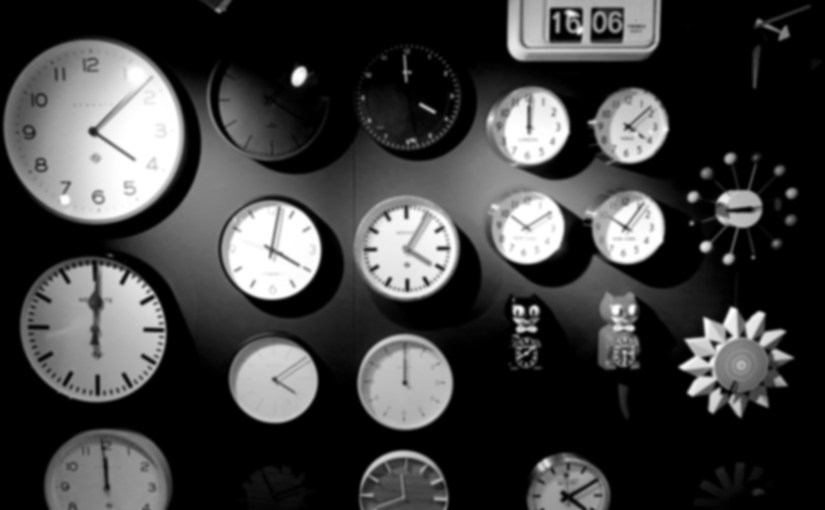
What I wish the world understood is that the same way you can be sight impaired, or hearing impaired, you can be time impaired. It is a sensory issue. There are people who simply cannot feel time as it passes or make informed estimates about the time that is needed. It is a sensory problem and no amount of planners, timers, or alarms will work because when time slips, so does your attention. You get lost in it—with it—and maybe that isn’t always a bad thing.

On days when I have nothing to do and no expectations to meet, when my time belongs to me and I can let it slip or stand, I feel free. On days like that, I like the way that time can stretch or narrow depending on how I feel. When I’m happy and hyper-focused, time is never ending. When I’m in love, time stands still. When I’m excited, time speeds up with me. Time bends to me, time becomes part of me. I wish I had more days like that.

Instead, most days are negatively impacted by the way time moves for me, but many of those negative effects stem from the structure of workplaces and deadlines. Without those structures, I’d be free to work in a way that felt right to me. Without those structures, we’d all feel more confident in our abilities rather than worrying about our shortcomings. We could all have more days when time felt like something we moved through—or that moved through us—rather than something we measured each other against.

🌶️

Catching Up

if someone called you right now to catch up, what’re the things you’d tell them about?

If I called you right now to catch up, it might surprise you to hear from me after such a long time away. I would say the things that everyone says. I would say I was sorry I hadn’t reached out. I would say it wasn’t you, but the work hours that have grown longer and the hours leftover that get shorter and shorter all the time.

If I called you right now to catch up, I would say I have been tired, that I have been stressed, and that I have piled too much on my plate. I would tell you that between my work, my family, my wife, and my home, there isn’t enough of me to go around. There isn’t enough of me left for me, and I am starting to feel it. I would say that through all of it though, I have missed you, and I would mean it though I would feel powerless to change it.

If I called you right now to catch up, I would want to tell you about all the good things too. I would tell you that I have been working out and that, for the first time in my life, the way I look on the outside is starting to match the way I feel on the inside. I would tell you that if you could see me, you might notice that it’s not just the shape of my body that has changed, but the way I carry myself, too. I feel more confident. I’m surer of myself. It’s an amazing feeling.

If I called you right now to catch up, I would tell you that I’m still working with special needs students by day and writing for We’re Not Really Strangers by night. I enjoy both jobs, but I’m beginning to long for something that is only mine. I’m thinking about school again. I’m thinking about a book someday. I’m thinking about my own story and the ways that only I can tell it. I’m wondering how I would change the world if I could.

If I called you right now to catch up, I would tell you that getting older is getting harder, but I am delighted to find that the wise ones were right all along. There is always something new to learn, especially about yourself, and, as it turns out, you can change as often and as much as you like. I’m learning a lot about people, about different ways to love, about how to be a good friend, about how to want more, and about how to accept less. I thought I knew all there was to know about all of this, but I was wrong, or maybe it’s just that those ideas worked for who I was and not for who I am becoming.

If I called you right now to catch up, I would ask if you knew what I meant. I would ask if you have ever felt the same. It’s hard to know if it’s just you or if everyone goes through the same things. It’s hard to know if you are explaining your life in a way that makes sense. If you are explaining your life the way it really feels to live it.

If I called you right now to catch up, I would tell you all that and a lot more has changed, but I would also tell you almost everything else has stayed exactly the same. I would tell you that I am still happy and healthy. I would tell you that I am still very much in love and still very married. I would tell you that my friendships have only deepened, that I am still working and writing when I can, and that, as always, I am frustrated by the how little time there is for all the thoughts I want to think, the things I want to make, and all the nothing I want to do.

If I called you now to catch up, I would tell you that I have missed you and that I hope you are doing well. I hope you aren’t feeling stressed. I hope your days feel like they belong to you. I hope all the things you love have stayed, and if you lost anything, I hope you know there is always more love you will feel someday.

If I called you now to catch up, I would tell you that I don’t want so much time to pass between us next time. I would tell you I have a plan to write more this month and to get to know who I am again in this place, but nothing in life ever seems to go according to my plans. I would tell you that I have doubts about whether I can really do it. Something always gets in the way. I always get in my way.

If I called you now to catch up, I would thank you for being here, for listening, and for making me feel seen. I would tell you to go enjoy the rest of your day and that I’ll call you again tomorrow.

🌶️